Synonyms of Tang: 20 Better Words With Examples
Finding the right synonyms of tang depends on what you mean by tang. The word usually describes a strong, sharp taste or smell, such as the flavor of lemon, vinegar, aged cheese, or the salty smell of sea air. It can also mean a slight trace or hint of something, especially in phrases such as “a tang of autumn.”
Because these meanings are different, not every word associated with tang works in every sentence. Words such as zest, piquancy, bite, pungency, and sharpness are useful for sensory descriptions, while hint, tinge, trace, and touch are better for the figurative meaning.
Quick Answer: What Are the Best Synonyms of Tang?
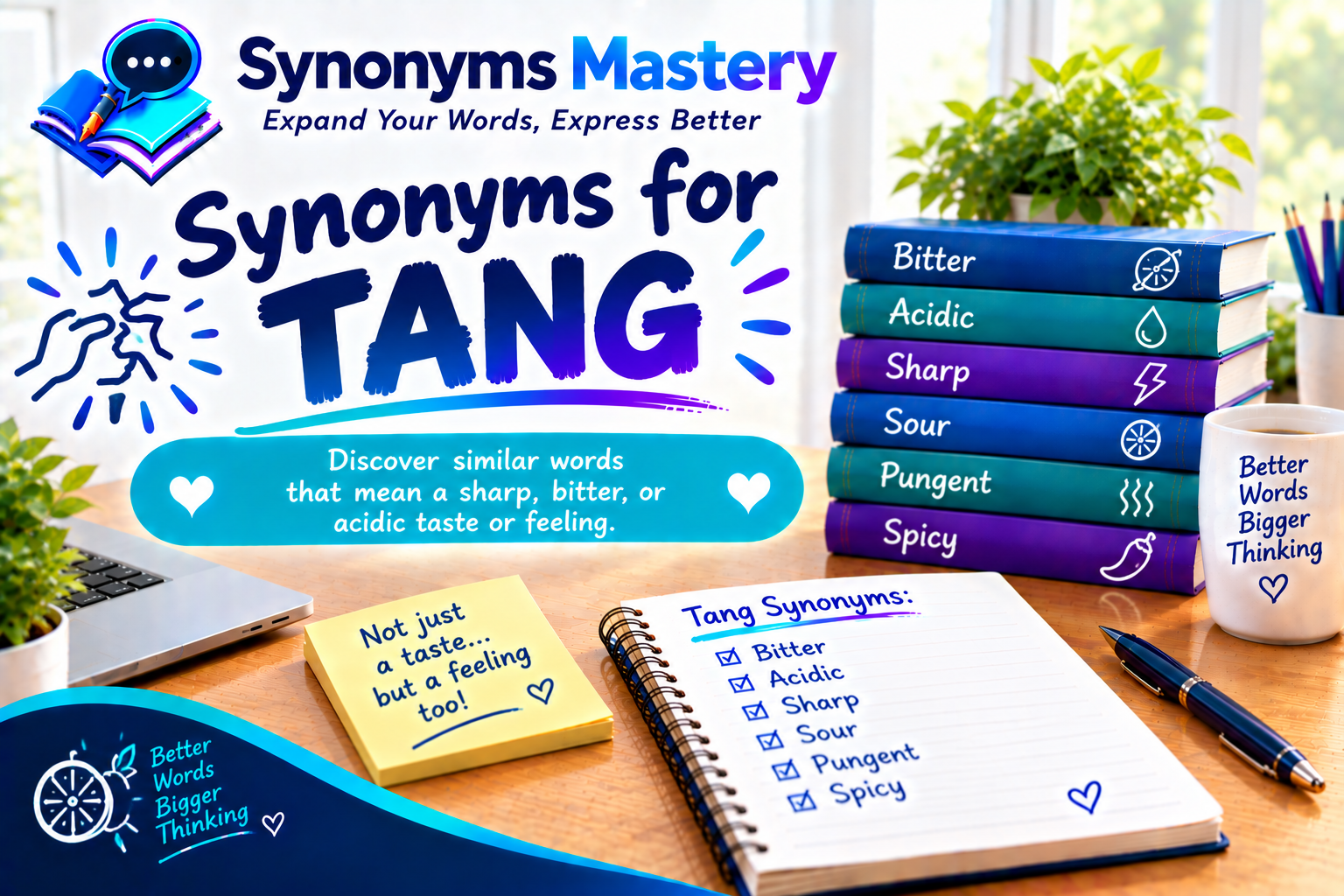
The closest synonyms of tang include flavor, savor, zest, piquancy, pungency, bite, sharpness, taste, scent, aroma, and smell, depending on context. When describing a sharp food flavor, zest, piquancy, or bite may work well. A distinctive smell can be described with scent, aroma, or pungency. For the figurative sense of a slight trace, use hint, tinge, or trace.
Synonyms of Tang at a Glance
| Word | Relationship | Meaning | Strength | Best Context |
| Flavor | Near synonym | Taste or characteristic quality of food or drink | Neutral | Food and cooking |
| Taste | Near synonym | Sensation perceived when eating or drinking | Neutral | General food descriptions |
| Savor | Near synonym | A distinctive taste or flavor | Moderate | Food and literary writing |
| Zest | Near synonym | A lively, sharp, refreshing flavor | Moderate | Citrus and flavorful foods |
| Piquancy | Near synonym | A pleasantly sharp or stimulating quality | Strong | Food and descriptive writing |
| Pungency | Near synonym | Strong, sharp quality of taste or smell | Strong | Spicy foods and strong smells |
| Bite | Contextual alternative | A sharp or noticeable flavor | Moderate | Cheese, sauces, drinks |
| Sharpness | Contextual alternative | A distinct, cutting quality of taste or smell | Moderate–strong | Cheese, acidic foods |
| Tartness | Contextual alternative | Acidic or sour quality | Moderate | Citrus and sour foods |
| Scent | Contextual alternative | A noticeable smell | Neutral | Air, plants, food |
| Aroma | Contextual alternative | A noticeable, usually pleasant smell | Neutral | Food and beverages |
| Smell | Broad alternative | Odor perceived by the nose | Neutral | General sensory description |
| Hint | Figurative alternative | A slight indication or trace | Light | Abstract qualities |
| Tinge | Figurative alternative | A slight amount or quality | Light | Emotion, color, atmosphere |
| Trace | Figurative alternative | A very small amount | Light | Abstract qualities |
| Touch | Figurative alternative | A small amount or element | Light | Style, emotion, atmosphere |
| Suggestion | Figurative alternative | A slight indication | Light | Abstract or literary contexts |
| Smack | Informal near synonym | A noticeable characteristic flavor | Moderate | Food, informal writing |
| Relish | Near synonym | Enjoyable flavor or taste | Moderate | Food |
| Zing | Informal near synonym | Lively, sharp flavor or quality | Moderate | Food and informal writing |
The distinction matters because tang is more specific than the broad words taste or smell. Cambridge defines it as a strong, sharp taste or smell, while Oxford similarly describes it as a strong, sharp taste or smell.
What Does Tang Mean?
Tang is a noun that usually refers to a strong, sharp taste or smell.
For example:
- The lemonade has a refreshing tang.
- There was a salty tang in the ocean air.
- The cheese has a distinctive tang.
The word can describe taste, smell, or a characteristic sensory quality. It can also describe a slight trace or hint of something in figurative expressions. Collins lists meanings including a strong taste or smell and a trace, touch, or hint of something.
The pronunciation is /tæŋ/ in both American and British English.
1. Flavor
Flavor is one of the broadest alternatives to tang. It refers to the overall taste or characteristic quality of food or drink.
Unlike tang, flavor does not necessarily suggest sharpness. A flavor can be sweet, salty, smoky, bitter, mild, rich, or sharp.
Example:
The lime gives the sauce a bright, fresh flavor.
Best for: General food and drink descriptions.
2. Taste
Taste is another broad alternative. It describes the sensory experience produced when something is eaten or drunk.
Use taste when you are talking about the general sensation rather than specifically emphasizing a sharp or strong quality.
Example:
The vinegar gives the dressing a sharp taste.
Best for: Everyday English and general descriptions.
3. Savor
Savor refers to a distinctive taste or flavor, particularly one that is noticeable and enjoyable.
It is somewhat more descriptive than taste and can sound natural in food writing.
Example:
The herbs add a rich savor to the soup.
Best for: Food writing and descriptive prose.
4. Zest
Zest can describe a lively, sharp, refreshing flavor, especially in citrus-based foods.
It is particularly useful when describing lemon, lime, orange, or other bright flavors.
Example:
Fresh lime gives the salsa a pleasant zest.
Best for: Citrus, refreshing flavors, and expressive food writing.
5. Piquancy
Piquancy describes a pleasantly sharp, stimulating, or spicy quality. It is more formal and literary than tang.
It works particularly well when the flavor has an exciting or stimulating quality.
Example:
The chili added a subtle piquancy to the sauce.
Best for: Sophisticated food writing and formal descriptions.
6. Pungency
Pungency emphasizes a strong, sharp quality in either taste or smell.
It can describe things such as onions, garlic, strong spices, or powerful odors. Unlike tang, it can easily carry an unpleasant implication.
Example:
The pungency of the raw garlic filled the kitchen.
Best for: Strong tastes and especially strong smells.
7. Bite
Bite is a useful informal or descriptive alternative when a food has a sharp, noticeable flavor.
It is commonly useful for foods such as cheese, mustard, sauces, and alcoholic drinks.
Example:
The aged cheddar has a sharp bite.
Best for: Cheese, sauces, condiments, and informal food descriptions.
8. Sharpness
Sharpness emphasizes the cutting or intense quality of a flavor or smell.
It can overlap with tang, but it is broader and may describe acidity, bitterness, or intensity rather than the distinctive quality implied by tang.
Example:
The sharpness of the vinegar balances the sweetness.
Best for: Acidic foods, cheese, vinegar, and sensory analysis.
9. Tartness
Tartness refers specifically to a sour or acidic quality.
This makes it narrower than tang. A tangy flavor may be tart, but not every use of tang specifically means sourness.
Example:
The tartness of the berries works well with the sweet cream.
Best for: Citrus, berries, fruit, yogurt, and acidic foods.
10. Scent
Scent is useful when tang refers to smell rather than taste.
However, scent does not automatically mean strong or sharp. It is therefore a broader alternative.
Example:
The salty scent of the ocean drifted through the open window.
Best for: Smells, especially when the emphasis is on the recognizable odor rather than sharpness.
11. Aroma
Aroma usually refers to a noticeable and often pleasant smell, particularly from food, coffee, wine, herbs, or flowers.
It is not an exact synonym for tang because aroma emphasizes smell rather than sharpness.
Example:
The aroma of freshly brewed coffee filled the room.
Best for: Pleasant food and drink smells.
12. Smell
Smell is the most general word in this group.
It can replace tang only when the intended meaning is simply an odor. It does not preserve the idea of a strong, sharp, distinctive quality.
Example:
There was a strong smell of salt in the air.
Best for: Everyday speech and general descriptions.
13. Hint
Hint belongs to a different sense of tang. When tang means a slight trace or suggestion of something, hint can be a natural alternative.
Example:
There was a tang of sadness in her voice.
can become:
There was a hint of sadness in her voice.
Best for: Emotions, qualities, moods, and abstract ideas.
14. Tinge
Tinge means a slight amount or trace of a particular quality.
It often works with emotions, colors, moods, and abstract characteristics.
Example:
There was a tinge of regret in his response.
Best for: Slight emotional or descriptive qualities.
15. Trace
Trace means a very small amount of something.
It is broader and more neutral than tang in the figurative sense.
Example:
The conversation had a trace of humor.
Best for: Very small amounts of qualities, emotions, or substances.
16. Touch
Touch can mean a small amount or element of a particular quality.
It often sounds natural when describing style, emotion, humor, elegance, or personality.
Example:
The speech had a touch of humor.
Best for: Style, emotion, personality, and abstract qualities.
17. Suggestion
Suggestion can replace tang when the intended meaning is a subtle indication of something.
Example:
There was a suggestion of irony in her comment.
Best for: Writing, speech, tone, and abstract meanings.
18. Smack
Smack can describe a noticeable characteristic taste or quality. It is more informal than tang.
Example:
The sauce has a smack of garlic.
Best for: Informal food descriptions.
19. Relish
Relish can refer to a distinctive or enjoyable taste. However, it also has other meanings, including enjoyment and a type of condiment, so context matters.
Example:
The herbs give the dish a rich relish.
Best for: Food and literary descriptions.
20. Zing
Zing is an informal word for a lively, energetic, or sharp quality. In food writing, it can describe a bright flavor similar to tang.
Example:
The lime juice gives the drink a little zing.
Best for: Casual food writing and conversational English.
Which Word Should You Use?
The best synonym depends on the quality you want to emphasize.
| If you mean… | Choose… | Why |
| A general taste | taste | Broad and natural |
| Overall food character | flavor | Covers the whole taste profile |
| A sharp, lively flavor | zest | Suggests freshness and brightness |
| A stimulating sharpness | piquancy | More formal and expressive |
| A powerful taste or smell | pungency | Emphasizes intensity |
| A sharp food quality | bite | Informal and vivid |
| Acidic or sour quality | tartness | More specific than tang |
| A noticeable smell | scent | Focuses on odor |
| A pleasant smell | aroma | Common for food and beverages |
| A slight emotional quality | hint | Natural for figurative use |
| A small trace | trace | Neutral and precise |
| A slight emotional coloring | tinge | Often used with abstract qualities |
Tang vs. Zest
Tang and zest overlap when describing lively or sharp flavors, particularly in food.
However, zest often suggests a fresh, bright, lively quality, while tang more directly emphasizes a strong or sharp taste or smell.
- The lemon gives the tea a refreshing tang.
- The lemon adds zest to the dressing.
Choose “tang” when sharpness is central.
Choose “zest” when freshness and liveliness are central.
Tang vs. Pungency
Both words can describe strong sensory qualities, but pungency generally emphasizes intensity.
Tang can be pleasant and refreshing, such as the tang of lemon or sea air. Pungency can describe a much stronger or harsher sensation, including smells that are unpleasant.
- The lime gives the drink a pleasant tang.
- The pungency of the onions was overwhelming.
Tang vs. Tartness
These words are especially easy to confuse in food writing.
Tartness specifically points toward a sour or acidic taste. Tang is broader and can describe a strong, sharp, or distinctive taste without necessarily meaning sourness.
For example, lemon may have both tang and tartness, but the two words emphasize different qualities.
Tang vs. Hint
These are synonyms only in one particular sense.
When tang means a slight trace or suggestion of something, hint can replace it naturally:
- a tang of sadness
- a hint of sadness
But hint cannot replace tang when tang refers to a sharp taste or smell.
This distinction is important because dictionary sources identify the “trace or hint” meaning separately from the sensory meaning.
Common Collocations With Tang
Some natural expressions include:
- a tang of lemon
- a tang of lime
- a tang of vinegar
- a tang of garlic
- a salty tang
- a sharp tang
- a pleasant tang
- a sour tang
- the tang of sea air
- the tang of the ocean
- the tang of autumn
The construction “the tang of + noun” is particularly useful in descriptive writing. Oxford gives examples involving lemons and the salty tang of sea air.
Common Mistakes With Tang Synonyms
1. Treating flavor as an exact synonym
Flavor is broader than tang. It does not necessarily suggest sharpness.
2. Using tartness for every tangy flavor
Tartness specifically relates to a sour or acidic quality. It should not automatically replace tang.
3. Using pungency when the smell is pleasant
Pungency can suggest a powerful or even unpleasant smell. If you simply mean a pleasant smell, aroma may be more appropriate.
4. Calling hint an exact synonym in every context
Hint works for the figurative “slight trace” sense but not for tang as a taste or smell.
5. Using aroma for sharp taste
Aroma primarily concerns smell. It does not accurately replace tang when the sentence focuses on taste.
6. Assuming zest always means tang
Zest overlaps with tang, but it can emphasize freshness and liveliness rather than sharpness alone.
Antonyms of Tang
There is no single perfect antonym for tang because the opposite depends on the context.
For taste, possible contrasts include:
- blandness
- mildness
- flatness
- subtlety
For smell, possible contrasts include:
- faintness
- neutrality
- odorlessness
When describing smell, possible contrasts include faintness, neutrality, or odorlessness. In the figurative sense, tang can mean a slight trace, so its opposite may simply be absence or lack.
Frequently Asked Questions
What is the closest synonym for tang?
There is no single synonym that works in every context. For a sharp taste, zest, piquancy, bite, or savor may work depending on the sentence. For a strong smell, pungency can be closer. When tang means a slight trace, hint, tinge, or trace is more appropriate.
What is another word for tangy taste?
Words such as zesty, sharp, tart, piquant, pungent, and flavorful can describe aspects of a tangy taste, but they are not interchangeable in every context. Tart emphasizes acidity, zesty often suggests freshness, and piquant emphasizes a stimulating sharpness.
Is zest a synonym for tang?
Zest can be a near synonym for tang when describing a lively or sharp flavor, especially citrus flavors. However, zest often emphasizes freshness and brightness, while tang focuses more directly on a strong, sharp taste or smell.
Is tang the same as tartness?
No. Tartness specifically describes a sour or acidic quality, while tang has a broader sensory meaning. A food can have a tang without being strongly sour. The two words overlap most clearly when describing citrus, fruit, vinegar, and other acidic foods.
What is a synonym for tang in smell?
Depending on the context, scent, smell, aroma, or pungency may work. Pungency emphasizes a strong or sharp smell, while aroma generally suggests a pleasant smell. Scent and smell are broader terms.
Can tang mean a hint?
Yes. Tang can have a figurative meaning referring to a slight trace or suggestion of something. In that context, words such as hint, tinge, trace, touch, and suggestion can be appropriate alternatives. This is different from the sensory meaning involving taste or smell.
What is the difference between tang and flavor?
Flavor is a broad term for the taste or characteristic quality of food, while tang emphasizes a strong, sharp, or distinctive quality. A food can have many flavors without having a tang. Therefore, flavor is usually broader than tang.
Is tang a positive word?
Often, yes, especially when describing a refreshing or distinctive taste or smell. However, context determines the connotation. A pleasant tang of lemon sounds positive, while a sharp tang of chemicals may describe an unpleasant smell.
Conclusion
The best synonyms of tang depend on the exact quality you want to describe. Use zest, piquancy, bite, or sharpness for particular types of strong flavor, and use scent, aroma, or pungency when the focus is smell. For the figurative meaning of a slight trace, hint, tinge, trace, and touch are more natural choices. The key is to match the synonym to the specific sensory or figurative meaning rather than treating every related word as interchangeable.

Chloe Mitchell is a professional content writer with expertise in building clear and engaging vocabulary resources. She focuses on creating easy-to-read synonym guides, helping users understand word meanings quickly. Her writing style is simple, user-friendly, and optimized for search engines.